

Explore top online electronics courses
Are you curious about how electronics work? From circuits to microprocessors, you can take a deep dive into electronics through online courses on edX.
Key takeaways
- Electronics powers consumer tech, making it one of the most exciting and innovative engineering fields.
- You can start learning electronics in weeks with online electronics courses and programs from edX.
- Advanced electronics courses can specialize your knowledge and open new career doors.
Popular electronics courses with certificates
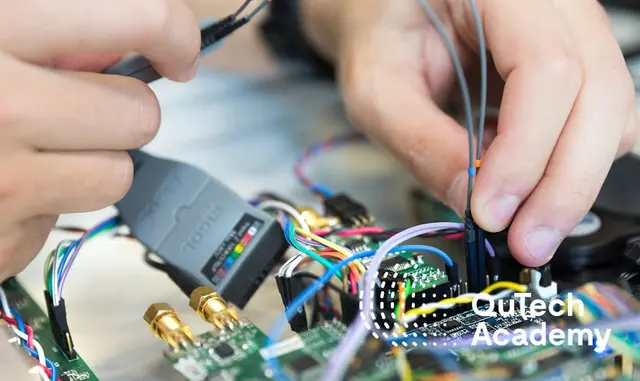




What is electronics?
Electronics is an engineering field that uses electrical signals and circuits to power technology. Computers, smartphones, medical devices, and communication systems rely on electronics for energy.
Learning electronics is all about understanding how electrical signals move and interact to create the technologies we rely on every day.
Why learn electronics?
- Troubleshoot electronic equipment: Improve the power efficiency of your devices and repair them.
- Learn what drives innovation: The Internet of Things (IoT) and other tech innovations rely on electronics, so understanding it gives you unique insights.
- Launch an electronics career: Learning electronics can lead to careers as an electronics installer, technician, or engineer.
What is the difference between electronics and electrical engineering?
Electronics engineering focuses on low-voltage electrical technology, while electrical engineering focuses on high-voltage technology. These fields overlap because both design electrically powered technology.
While electrical engineering builds power generators, industrial machinery, and large motors, electronics engineering builds consumer electronics, microprocessors, and other consumer tech.
Browse electronics courses
Browse online Electronics certificates
Find new interests and advance your career opportunities
Stand out in your field
Use the knowledge and skills you have gained to drive impact at work and grow your career.
Learn at your own pace
On your computer, tablet or phone, online courses make learning flexible to fit your busy life.
Earn a valuable credential
Showcase your key skills and valuable knowledge.
Certificates







Careers you can pursue with an electronics background
Electronics professionals understand electrical hardware, electronics testing methods, and electronics software. They also bring strong problem-solving, communication, and collaboration skills to the field.
Studying electronics can prepare you for many career paths. Electronics courses can lead to a career as an electronics installer and repairer. An electronics program can train you for electronics technician roles. And with a bachelor's degree, you can become an electronics engineer.
Because electronics and electrical engineering overlap, electronics courses can also build skills for electrical engineering careers.
Electronics installer and repairer
These electronics specialists install, diagnose, and repair electronics in transportation equipment, tools, motor vehicles, and industrial settings.
- Required education: High school diploma or equivalent
- Median annual salary (2024): $71,270
Electronics installer and repairer
These electronics specialists install, diagnose, and repair electronics in transportation equipment, tools, motor vehicles, and industrial settings.
- Required education: High school diploma or equivalent
- Median annual salary (2024): $71,270
Why learn electronics online with edX
edX helps learners around the world grow their skills and careers. Join our learning community today!
Trusted by leading institutions
Hear what other learners have to say
"We weren't just taught some formulas. We were given real-world problems to solve, and that has changed the way I think about some subjects."
— Ashwith Rego, Learner in MIT's Circuits and Electronics
How to start learning electronics
You can get started in electronics with introductory courses in circuits and electronics. Once you have the basics down, build on your foundation with edX's online electronics courses.
1. Build foundational electronics knowledge
Start with the basics of electronics engineering, including the principles of electronic circuits and computational structures.
Featured courses

1. Build foundational electronics knowledge
Start with the basics of electronics engineering, including the principles of electronic circuits and computational structures.