

Learn geometry
Building up your geometry skills can help you better see the world and provide you with the knowledge to succeed in several key industries. Learn more about what geometry is, how to choose a learning path that works best for you, and what kinds of career options may be available to professionals with this skill set.
What is geometry?
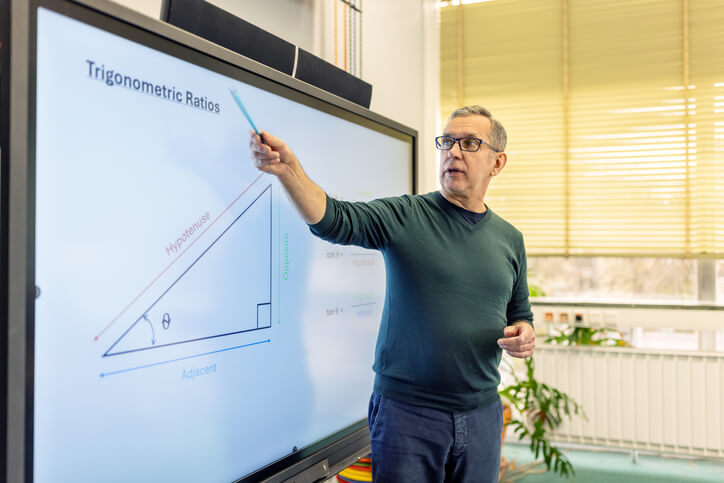
Geometry is the study of shapes, surfaces, lines, and points and how these different elements interact. You'll find geometry utilized in many different fields, including engineering, graphics and design, technology, science, healthcare, and more.
Some of the more common jobs within these fields include robotics engineer, graphic designer, carpenter, fashion designer, and mechanical engineer.
More technical jobs that utilize geometry, such as those in engineering fields, may require a bachelor's degree, which will take around four years to earn. Less technical jobs like carpentry may not require a formal degree but still demand education and hands-on experience.
Browse online Geometry certificates
Find new interests and advance your career opportunities
Stand out in your field
Use the knowledge and skills you have gained to drive impact at work and grow your career.
Learn at your own pace
On your computer, tablet or phone, online courses make learning flexible to fit your busy life.
Earn a valuable credential
Showcase your key skills and valuable knowledge.
Certificates







Related Topics
Choosing the right geometry program for you
Choosing the right program to learn geometry depends heavily on your desired end goal. If you're looking to enter a more technical field, consider the minimum requirements for entry-level positions, which may include earning a degree.
If you want to take geometry classes to supplement your existing career or to enter a less technical profession, find a program that matches your current proficiency in geometry. Some programs are designed for beginners who struggle with mathematics, whereas courses such as analytical geometry or differential geometry assume a base level of knowledge.
Here are some of your learning path options when it comes to geometry:
Courses
Geometry courses are one of the most direct ways to learn specific elements of geometry. This may include certain aspects of mathematics or practical applications such as geometry for design or geometry for computer science.
Certifications
A certification in a specific discipline of geometry can tangibly demonstrate your newfound expertise and knowledge to prospective employers.
Executive education programs
When you need to learn geometry to excel in your current role, executive education programs can provide instruction in schedule-conscious ways. This path is often best for industry veterans looking to upskill in pursuit of a promotion or job change.
Degrees
Many jobs that use geometry also require at least an undergraduate degree, so pursuing a bachelor's or even master's degree can often be a wise investment in your future. Common options include bachelor's programs in applied mathematics, interior design, or physics.
Jobs in geometry
Geometry is a complementary skill that is vital in many industries and professions, but it's generally not sufficient for a job or career. In other words, you should look for a job that utilizes geometry, but expect it to require additional training. Some of the common jobs that use this mathematical skill include game designer, engineer, astronomer, forensic analyst, teacher, and construction worker.
Jobs that utilize geometry can take place in an office, in a more hands-on setting, or a combination of the two. For example, an engineer may spend time in the office preparing plans and then time overseeing the implementation of their designs at the construction site.
Here are a few positions that having experience in geometry may help you qualify for, with each role's required education as well as salary data from the Bureau of Labor Statistics (BLS):
Learn geometry online with edX
If you're ready to further develop your skills in geometry, then choose one of the options listed above or sign up for an online course through edX and get started today.
More opportunities for you to learn
We've added 500+ learning opportunities to create one of the world's most comprehensive free-to-degree online learning platforms.