
What is a business cycle? Understand phases and how to prepare
The business cycle includes four distinct phases, each of which presents unique opportunities and challenges. Learn how to position your organization while reducing your risk exposure.
What is a business cycle?
Economies tend to follow patterns of behavior, ebbing and flowing in specific ways in response to increasing and decreasing levels of economic activity. These patterns are collectively known as a business cycle or economic cycle. The business cycle includes four distinct phases:
- Expansion
- Peak
- Contraction
- Trough
By understanding the cycle and how it works, businesses can position themselves to navigate shifting economic trends. This guide explains the business cycle and its phases, and offers tips on how to prepare for impending changes. Use it to inform your planning and connect with opportunities to learn more.
Explore economics and business courses on edX


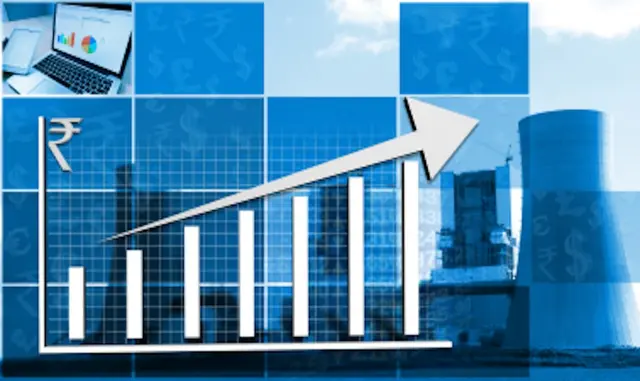













The four phases of a business cycle
Expansion
During the expansion phase, economic activity grows amid favorable conditions: Business output increases, investment accelerates, companies become more profitable, unemployment falls, and personal incomes rise.
Expansion phases typically last around 4–5 years, but they can be as brief as 10 months or as long as 10 years or more.
Peak
Eventually, expansion reaches its limit and underlying economic indicators begin to plateau. Prices hit maximum levels, and consumer demand can become so strong that businesses cannot keep pace. These factors indicate an impending reversal of growth trends.
Economists typically recognize peaks retrospectively, since they tend to become clear only once a reversal has started.
Contraction
After a peak, the trends established during the expansion phase begin to reverse. Consumer demand declines, creating supply-and-demand imbalances. This can trigger price reductions, leading to corresponding declines in personal incomes, wage growth, and business growth.
Some economists subdivide contraction phases into recessions and depressions. Recessions are usually milder, shorter-term declines, while depressions are severe and prolonged.
Trough
The trough represents the nadir of the contraction phase: Economic indicators reach their lowest levels as personal incomes, business output, investment activity, and enterprise growth reach bottom.
A trough is essentially the opposite of a peak, marking the point at which the next cycle of expansion begins. As with peaks, economists tend to recognize troughs retrospectively.
What causes business cycles?
Economists have developed multiple theories. One such theory, the Keynesian model, was developed by British economist John Keynes. Keynes' paradigm views the business cycle as a natural response to fluctuating macroeconomic conditions arising from dynamic changes in consumer demand.
A major competing model suggests that disruptive innovations and new technologies are the root causes of cyclical economic changes. Economists, including Finn E. Kydland and Edward C. Prescott, are credited with developing these theories.
Government and central bank policies, global shocks, geopolitical events, and other internal and external factors can also trigger phasic changes in the business cycle. The COVID-19 pandemic is an excellent recent example of an unpredictable shock that led to abrupt and profound changes in global economic activity.
How to prepare for business cycles
Phasic changes in the business cycle can be difficult to recognize and predict. Businesses can adopt defensive strategies that create the operational agility to adjust to macroeconomic conditions as they change.
You can:
- Build strong cash reserves. A strong cash position makes it easier to survive economic downturns — especially sudden, sharp ones.
- Limit linear planning. Do not assume that current macroeconomic conditions will persist indefinitely when budgeting, planning for demand, or managing inventory. Instead, prioritize strategic flexibility in these and similar areas.
- Diversify. Adjust your product and service offerings to appeal to a broader cross-section of market demographics. This can insulate you from downturns affecting your established customer base.
- Create contingency plans. Keep cost structures flexible and develop response plans for economic upturns and downturns. Analyze economic data releases for clues that could indicate potential changes in economic direction, and adjust your plans accordingly.
It may also help to educate yourself on business acumen and sharpen your general economics knowledge.
Build your knowledge in economics and business
Entrepreneurs, business leaders, and managerial professionals can all benefit from deep, well-developed knowledge of macroeconomics and its impacts on the business cycle. Enhance yours with business management courses and programs, or with economics-focused executive education.