

Learn agriculture with online courses and programs
Agriculture is an integral part of the world’s food system. Explore agricultural topics or a career in agriculture with online courses delivered through edX.
What is agriculture today?
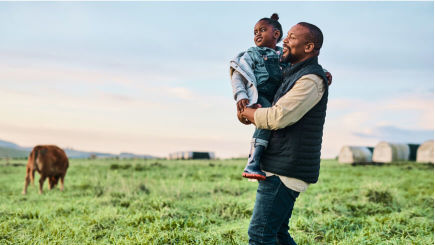
Agriculture is the science and practice of farming produce, cultivating soil, and raising livestock. It also involves adapting major sources of life, growth, and sustenance in a rapidly changing climate and economy. Food systems have shifted because natural resources have been affected by climate change and natural disasters. Understanding changing agricultural demands and technology can be useful to today’s farm operators.1
Experts in agriculture have learned more about the outcomes of mass farming in the 20th century, including the dangers of pest control and the effects of specialty crops. The challenge for the agricultural sector is to manage sustainable development and apply new tools. Agricultural and food scientists leverage sophisticated technology to achieve a range of outcomes, from higher crop productivity to less chemical runoff .2
Browse online agriculture courses
Browse online Agriculture certificates
Find new interests and advance your career opportunities
Stand out in your field
Use the knowledge and skills you have gained to drive impact at work and grow your career.
Learn at your own pace
On your computer, tablet or phone, online courses make learning flexible to fit your busy life.
Earn a valuable credential
Showcase your key skills and valuable knowledge.
Certificates











Related Topics
Agriculture course curriculum
Because agriculture is such a wide-reaching topic, there are many different types of courses that learners can pursue. An online agriculture class can introduce learners to different perspectives on food security, consumer influences on the food system, and digital tools for farming. Learning about agriculture can also be useful for individuals who want to understand the green revolution and the effects of industrial agriculture. A business program might focus on supply chain management in the industry or a big data course could teach learners to use sensors and the Internet of things to make real-time farming decisions.
Some examples of topics covered in an introductory agriculture course include:
- Elements of global food systems
- Animal health
- Health impacts of food consumption
- Cooperatives and producer communities
- The science and politics of genetically modified organisms
- Sustainable development
- Environmental science
Explore careers in agriculture
Explore careers in agriculture
Agriculture calls for a range of knowledge and experiences beyond raising crops and livestock. It involves understanding how to preserve natural resources and how to interact with government stakeholders, such as the Department of Agriculture and the Food and Drug Administration in the United States. Agricultural and food scientists develop new products and discover breakthroughs addressing food systems and the environment. And, an agricultural engineer has many different duties that include, but are not limited to:3
- Using computer software to design equipment, systems, or structures.
- Managing environmental factors, such as airflow in a barn or runoff patterns on a field.
- Testing equipment for safety and reliability.
- Overseeing construction and production operations.
- Collaborating with clients, contractors, consultants, and other engineers to ensure effective and desirable outcomes.
How to prepare for a job in agriculture
If you are interested in pursuing a career in the agriculture industry, explore how online courses can help prepare you for various positions. Each job in this sector can have very different requirements based on the employer and occupation. For example, a bachelor’s degree may be required to be an agricultural engineer, agricultural and food scientist, or conservation scientist. Individuals who want to pursue professions in this sector may also benefit from courses in calculus, physics, biology, and chemistry. Other helpful courses for aspiring agriculture experts can include business, public policy, and economics, depending on the job role they hope to pursue.
With edX, you can find the right educational pathway that fits your needs. From specialized boot camps that can teach skills like data analysis and product management to full degree programs where you can earn a master’s degree, there are many different learning opportunities that can help you build the knowledge you need to be successful in this sector. Start learning today.
More opportunities for you to learn
We've added 500+ learning opportunities to create one of the world's most comprehensive free-to-degree online learning platforms.
Agriculture FAQ
Frequently Asked Questions
The Art and Science of Agriculture. (2023). National Geographic. Retrieved March 20, 2023.
Agriculture Technology. USDA. National Institute of Food and Agriculture. Retrieved March 20, 2023.
What Agricultural Engineers Do. (2022) U.S. Bureau of Labor Statistics. Retrieved December 7, 2022.